> For the complete documentation index, see [llms.txt](https://docs.vechain.org/llms.txt). Markdown versions of documentation pages are available by appending `.md` to page URLs; this page is available as [Markdown](https://docs.vechain.org/core-concepts/wallets/sync2/user-guide/wallet.md).
# Wallet
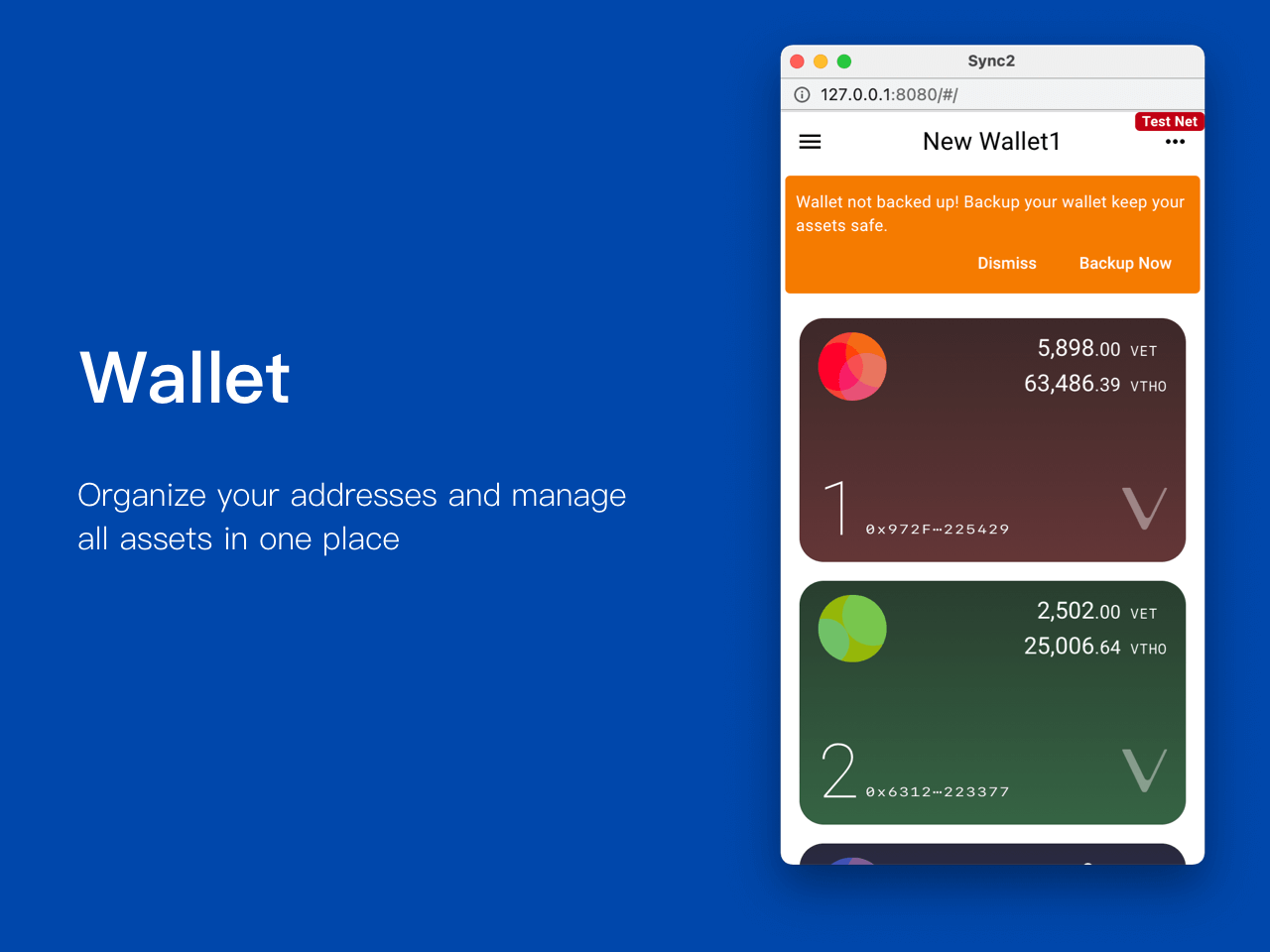
## Wallet list
All the wallets will be shown in wallet list.
{% hint style="info" %}
If it is a Ledger wallet, you can identify the wallet by the presence of the
{% endhint %}
## New Wallet
### Generate
1. Click upper left  to open wallet list
2. Click the upper area  to new wallet page
3. Click **Generate**
4. Verification
1. Password: Enter your password to authorize the generation
2. Biometric authentication:
1. Facial recognition: hold your device in portrait orientation, then glance at it.
2. Fingerprint recognition: place your finger on fingerprint scanner
{% hint style="info" %}
Mobile - Long press the **Generate**
Desktop - Right click the **Generate**
{% endhint %}
### Import
1. Click upper left  to open wallet list
2. Click the upper area  to new wallet page
3. Click **Import**
4. Enter your mnemonic words
5. Enter your password to authorize the import
### Link Ledger device
1. Click upper left  to open wallet list
2. Click the upper area  to new wallet page
3. Click **Link Now**
4. Connect and unlocked your Ledger device
5. Click **Link**
### Wallet name
By default, we use "New Wallet" as the name for each new wallet. You can easily change the name by editing the input text field.
### Custom network wallet
{% hint style="info" %}
Before adding the custom network wallet, you need to [Settings](/core-concepts/wallets/sync2/user-guide/settings.md#add-node) beforehand
{% endhint %}
1. Click upper left  to open wallet list
2. Click the upper area  to open the new wallet page
3. Click upper right 
4. Select **Private**
5. Click **Import** / **Generate**
## Backup wallet
The mnemonic words store all the information that is needed at any point in time to recover your wallet. The mnemonic words should be **stored in a secure place**. It ensures you have had a backup in a scenario where your device breaks down or becomes unusable due to any reason. In such cases, all you need is your mnemonic words to recover the wallet.
1. Click **Backup Now** on the banner
2. Backup manually
1. Click on upper right 
2. Click **Backup**
{% hint style="info" %}
* Once you've backed up the wallet or wallet is imported, the backup banner won't be shown, you can try to back up manually
* Ledger wallet mnemonic words are managed by Ledger itself. therefore, you will not be able to back up your device via Sync2
{% endhint %}
## Rename wallet
Wallet name is the identifier to help you easily tell the wallet.
1. Click upper right 
2. Click upper right 
3. Click **Rename**
4. Enter the name of your wallet
5. Click **Confirm**
## Delete wallet
1. Click upper right 
2. Click **Delete**
3. Follow the instructions to continue the deletion
4. Click **Delete**
5. Enter your password to authorize the deletion
## Create new address
1. Click upper right 
2. Click **New Address**
{% hint style="info" %}
A user is limited to a maximum of 10 addresses.
{% endhint %}
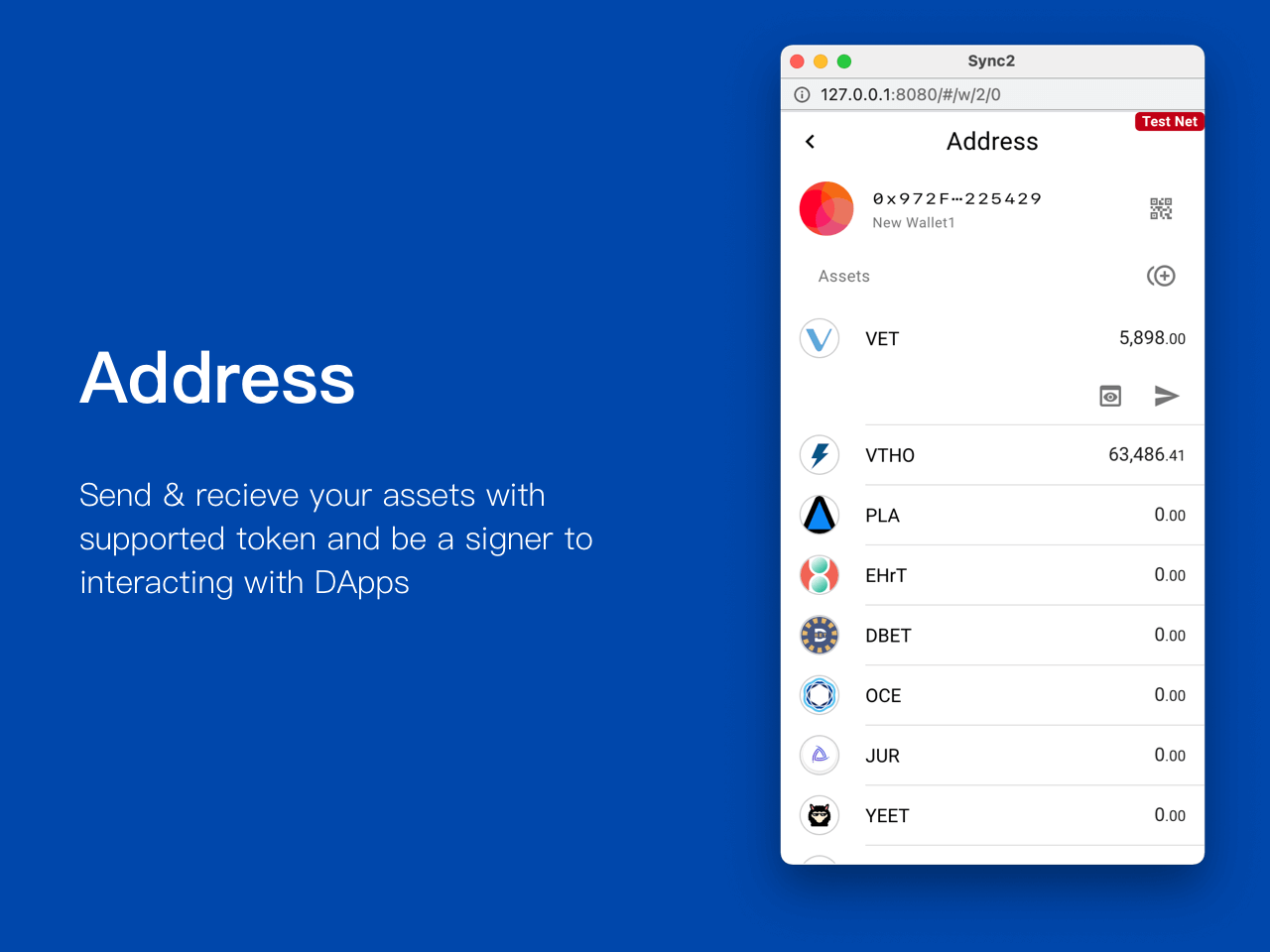
## Address
### Add assets
1. Click middle right 
2. Choose the token from the token list
3. Toggle on to enable
### Transfer history
1. Click the asset you would like to check the history
2. Click  to check the details
### Send asset
1. Click the asset you would like to send
2. Click  to send asset
### Receive asset
1. At the upper right
2. Click  to view the QR Code or copy address
 wallet list.
{% hint style="info" %}
If it is a Ledger wallet, you can identify the wallet by the presence of the
wallet list.
{% hint style="info" %}
If it is a Ledger wallet, you can identify the wallet by the presence of the  {% endhint %}
## New Wallet
### Generate
1. Click upper left  to open wallet list
2. Click the upper area  to new wallet page
3. Click **Generate**
4. Verification
1. Password: Enter your password to authorize the generation
2. Biometric authentication:
1. Facial recognition: hold your device in portrait orientation, then glance at it.
2. Fingerprint recognition: place your finger on fingerprint scanner
{% hint style="info" %}
Mobile - Long press the **Generate**
Desktop - Right click the **Generate**
{% endhint %}
### Import
1. Click upper left  to open wallet list
2. Click the upper area  to new wallet page
3. Click **Import**
4. Enter your mnemonic words
5. Enter your password to authorize the import
### Link Ledger device
1. Click upper left  to open wallet list
2. Click the upper area  to new wallet page
3. Click **Link Now**
4. Connect and unlocked your Ledger device
5. Click **Link**
### Wallet name
By default, we use "New Wallet" as the name for each new wallet. You can easily change the name by editing the input text field.
### Custom network wallet
{% hint style="info" %}
Before adding the custom network wallet, you need to [Settings](/core-concepts/wallets/sync2/user-guide/settings.md#add-node) beforehand
{% endhint %}
1. Click upper left  to open wallet list
2. Click the upper area  to open the new wallet page
3. Click upper right 
4. Select **Private**
5. Click **Import** / **Generate**
## Backup wallet
The mnemonic words store all the information that is needed at any point in time to recover your wallet. The mnemonic words should be **stored in a secure place**. It ensures you have had a backup in a scenario where your device breaks down or becomes unusable due to any reason. In such cases, all you need is your mnemonic words to recover the wallet.
1. Click **Backup Now** on the banner
2. Backup manually
1. Click on upper right 
2. Click **Backup**
{% hint style="info" %}
* Once you've backed up the wallet or wallet is imported, the backup banner won't be shown, you can try to back up manually
* Ledger wallet mnemonic words are managed by Ledger itself. therefore, you will not be able to back up your device via Sync2
{% endhint %}
## Rename wallet
Wallet name is the identifier to help you easily tell the wallet.
1. Click upper right 
2. Click upper right 
3. Click **Rename**
4. Enter the name of your wallet
5. Click **Confirm**
## Delete wallet
1. Click upper right 
2. Click **Delete**
3. Follow the instructions to continue the deletion
4. Click **Delete**
5. Enter your password to authorize the deletion
## Create new address
1. Click upper right 
2. Click **New Address**
{% hint style="info" %}
A user is limited to a maximum of 10 addresses.
{% endhint %}
## Address
{% endhint %}
## New Wallet
### Generate
1. Click upper left  to open wallet list
2. Click the upper area  to new wallet page
3. Click **Generate**
4. Verification
1. Password: Enter your password to authorize the generation
2. Biometric authentication:
1. Facial recognition: hold your device in portrait orientation, then glance at it.
2. Fingerprint recognition: place your finger on fingerprint scanner
{% hint style="info" %}
Mobile - Long press the **Generate**
Desktop - Right click the **Generate**
{% endhint %}
### Import
1. Click upper left  to open wallet list
2. Click the upper area  to new wallet page
3. Click **Import**
4. Enter your mnemonic words
5. Enter your password to authorize the import
### Link Ledger device
1. Click upper left  to open wallet list
2. Click the upper area  to new wallet page
3. Click **Link Now**
4. Connect and unlocked your Ledger device
5. Click **Link**
### Wallet name
By default, we use "New Wallet" as the name for each new wallet. You can easily change the name by editing the input text field.
### Custom network wallet
{% hint style="info" %}
Before adding the custom network wallet, you need to [Settings](/core-concepts/wallets/sync2/user-guide/settings.md#add-node) beforehand
{% endhint %}
1. Click upper left  to open wallet list
2. Click the upper area  to open the new wallet page
3. Click upper right 
4. Select **Private**
5. Click **Import** / **Generate**
## Backup wallet
The mnemonic words store all the information that is needed at any point in time to recover your wallet. The mnemonic words should be **stored in a secure place**. It ensures you have had a backup in a scenario where your device breaks down or becomes unusable due to any reason. In such cases, all you need is your mnemonic words to recover the wallet.
1. Click **Backup Now** on the banner
2. Backup manually
1. Click on upper right 
2. Click **Backup**
{% hint style="info" %}
* Once you've backed up the wallet or wallet is imported, the backup banner won't be shown, you can try to back up manually
* Ledger wallet mnemonic words are managed by Ledger itself. therefore, you will not be able to back up your device via Sync2
{% endhint %}
## Rename wallet
Wallet name is the identifier to help you easily tell the wallet.
1. Click upper right 
2. Click upper right 
3. Click **Rename**
4. Enter the name of your wallet
5. Click **Confirm**
## Delete wallet
1. Click upper right 
2. Click **Delete**
3. Follow the instructions to continue the deletion
4. Click **Delete**
5. Enter your password to authorize the deletion
## Create new address
1. Click upper right 
2. Click **New Address**
{% hint style="info" %}
A user is limited to a maximum of 10 addresses.
{% endhint %}
## Address